You might be wondering: how does popcorn pop? Each kernel is a tiny pressure cooker: trapped moisture turns to steam until the hull bursts and the starch puffs out. The details are below.
This page is part of the site’s wider guide to popcorn.
| Item | Value |
|---|---|
| Moisture in a well-popping kernel | 13 to 14.5 percent of total weight |
| Temperature at which 96% of kernels had popped in the study | 356°F |
| Pressure inside the kernel at that point | roughly 10 bars |
| Camera speed used to film the pop | 2,900 frames per second |
| Kernels that failed to pop, depending on variety | 4 to 47 percent |
| Starch share of popcorn | about 70 percent |
These figures come from Purdue Agriculture and Fox News, and measurements can change as research continues, so check the sources before you rely on them.
What is inside a popcorn kernel?
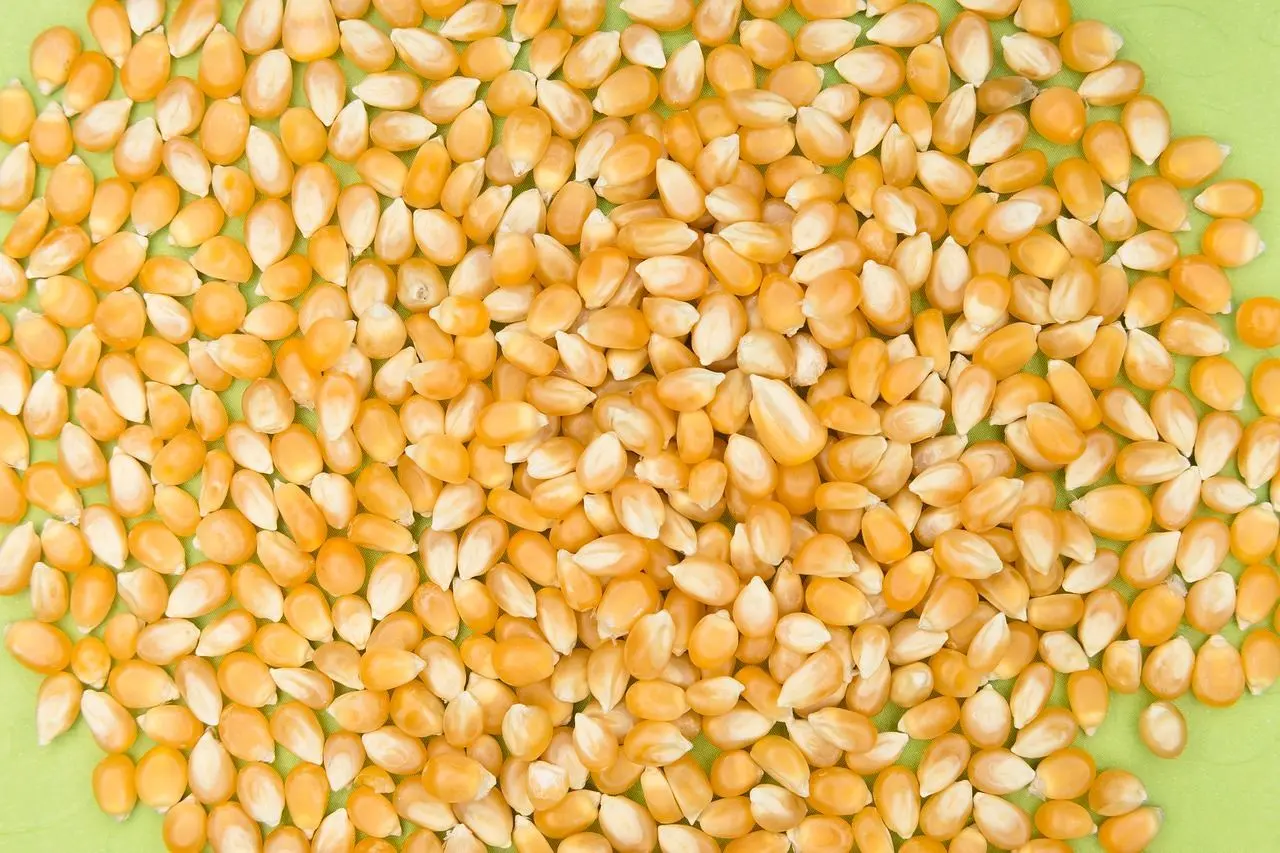
Every kernel is a seed with a hard outer hull called the pericarp, wrapped around starch and a little water. Purdue Agriculture’s Bruce Hamaker says a kernel that pops well holds moisture of about 13 to 14.5 percent of its total weight, as described in Purdue’s report.
The Farmers’ Almanac gives a similar range, saying most properly conditioned kernels hold roughly 13-14% moisture. That small amount of water is the fuel for the whole process.
Starch makes up most of the rest. Hamaker describes popcorn as mostly starch, at about 70 percent, with smaller amounts of protein, fiber and fat, according to Purdue.
How a kernel turns into popcorn
The sequence is the same in a pan, an air popper or a microwave. In short, heat builds pressure until the hull gives way.
- Heat warms the kernel, and the water inside starts turning to vapor.
- The tough hull keeps that vapor trapped, so the pressure climbs.
- Heat also softens the starch into a thick, flexible material.
- The hull ruptures, the pressure drops suddenly, and the hot starch expands outward.
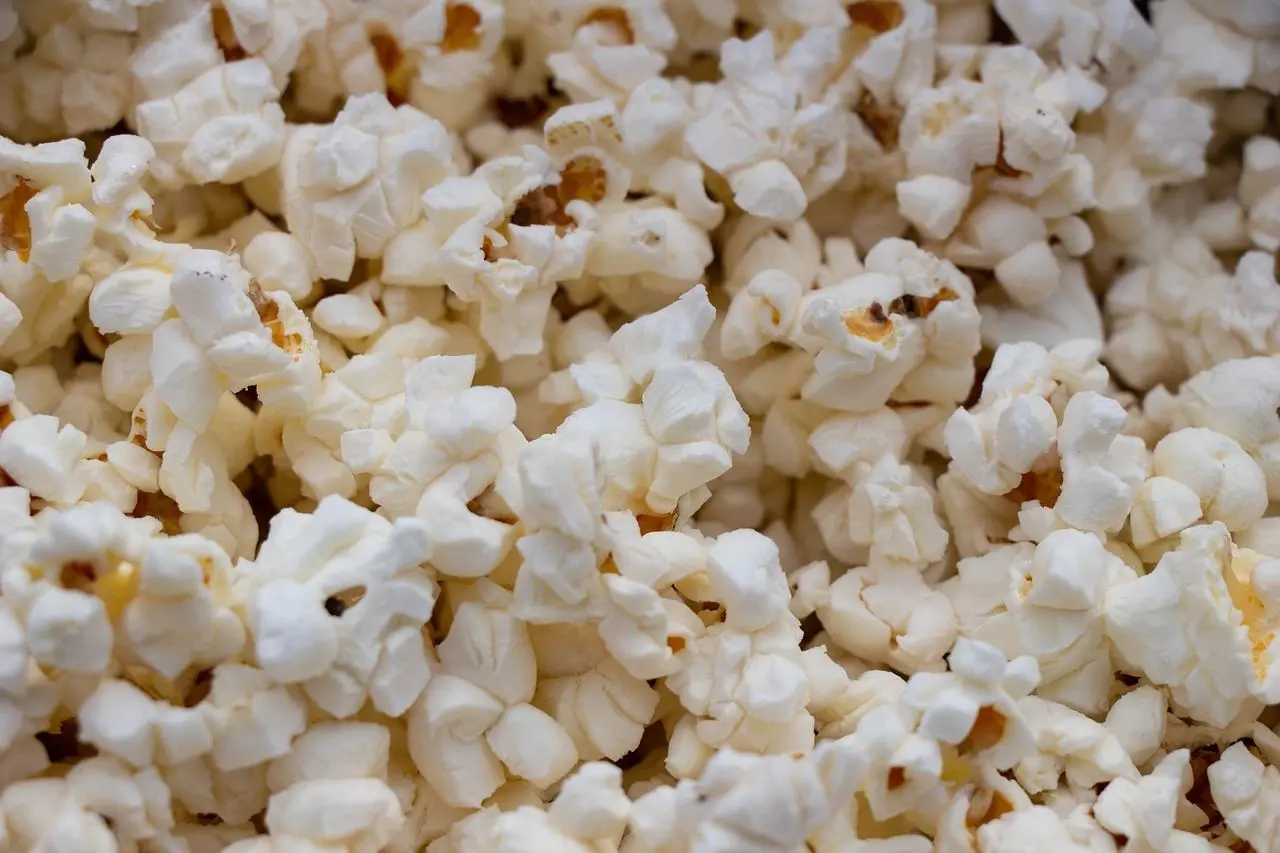
- The starch cools and sets into the airy, irregular shape you know as popcorn.
Purdue’s food scientists describe the kernel as a pressure cooker that builds force as the water inside heats and vaporizes. They add that the kernel essentially turns inside out as it pops, per Purdue Agriculture.
A 2015 study in the Journal of the Royal Society Interface, by engineers Emmanuel Virot and Alexandre Ponomarenko, put numbers on the process, as Fox News reported. In their tests, 96% of kernels had popped at 356°F, when pressure inside had risen to roughly 10 bars. The Farmers’ Almanac summary of the research likewise says nearly all kernels popped at about that temperature.
What causes the popping sound
It is easy to assume the pop is the hull cracking. According to Fox News’s report on the study, the researchers found the sound is triggered by the pressurized vapor being released, not by the kernel cracking or the popcorn jumping.
In the researchers’ words, the sudden pressure drop sets cavities inside the popcorn ringing like an acoustic resonator. So the noise is closer to a tiny chamber sounding off than to a twig snapping.
The same report describes a camera running at 2,900 frames per second. It showed the starch expanding at 6.9 milliseconds, after which a “leg” of starch pressed against the plate, bounced and sent the popcorn into the air, as Fox News summarized. The Farmers’ Almanac also notes that kernels can launch themselves using a temporary projection of expanding starch.
Why some kernels never pop
Even careful cooks end up with a few hard leftovers, sometimes called old maids, according to the Farmers’ Almanac. In Hamaker’s research, 4 to 47 percent of kernels, depending on variety, failed to pop, as Purdue reports.
Purdue’s explanation is a weak hull: cuts or weaknesses in the outside layer let moisture leave during heating. Hamaker also found that the best popping kernels have a stronger pericarp, which keeps more moisture in. Purdue ties the hull to why only a small share of Indiana’s corn pops while the rest cannot.
The Farmers’ Almanac lists three common causes of duds:
- Too little moisture inside, so not enough pressure builds.
- A cracked or otherwise damaged hull that lets steam escape early.
- Not enough heat reaching the kernel.
Using the science in your kitchen
Because moisture drives the pop, how you handle the kernels matters. The Farmers’ Almanac offers these pointers:
- Keep unpopped kernels in an airtight container in a cool, dry cupboard to help preserve their natural moisture.
- Avoid leaving them exposed to air, particularly in a very dry environment.
- On the stovetop, use a suitable covered pan and a tested method, since hot oil, escaping steam and flying kernels can cause burns.
The guide on how to store popcorn covers the storage side in more detail. Once the batch is done, the guide to how to make seasoning stick to popcorn covers the next step.
Frequently asked questions
What temperature do kernels pop at?
Show answer
Around 180°C. The Farmers’ Almanac reports that nearly all kernels in the researchers’ experiment had popped at about that heat.
Where does the white part of popcorn come from?
Show answer
It was inside the yellow kernel all along. Heat and pressure give the softened starch room to expand, and it sets almost instantly, as the Farmers’ Almanac explains.
Can dried-out kernels still pop well?
Show answer
Kernels that dry out may never reach the pressure they need, and the Farmers’ Almanac says their popping performance suffers when they become too dry. The sources used here give no tested way to restore moisture, so airtight storage is the safer route.