Mid-afternoon hunger at your desk is easy to solve with healthy snack ideas for work: pair a fibre source with a protein, portion it out, and keep it within reach. Here is what to stock.
This guide sits inside the wider topic of healthy snacks, narrowed down to what suits an office desk.
| Item | Value |
|---|---|
| Nuts, one serving | 28 grams (about 23 almonds) |
| Air-popped popcorn | 3 cups (33 grams) |
| String cheese | 42 grams |
| Carrot strips or baby carrots | 1 cup (130 grams) |
| Low-fat or nonfat yogurt | 224 grams |
| High-fibre cereal benchmark | More than 5 grams of fibre per serving |
The portions come from MedlinePlus and the cereal benchmark from the Center for Young Women’s Health. Figures can change, so check the sources before you rely on them.
What makes a snack suit a desk?
A good desk snack is easy to portion, simple to eat between emails and unlikely to leave you hungry an hour later. The easiest rule to remember is to pair fibre with protein, which is the approach the Center for Young Women’s Health describes in its healthy snacks guide.
MedlinePlus adds that a protein and a carbohydrate together keep a snack satisfying for the longest, as explained in its snacks for adults page.
When you are unsure about a snack, read the Nutrition Facts label for serving size, calories, fat, sodium and added sugars. The same page suggests skipping anything that lists sugar among its first few ingredients.
Fibre-plus-protein pairs that take minutes
Pick one item from a fibre list and one from a protein list, and you have a balanced snack. Fibre options include apple, banana, grapes, carrot and celery sticks, snap peas with bell peppers, and whole wheat pita. Protein options include nuts, string cheese, hummus, nut or seed butter, yogurt, cottage cheese and hard-boiled eggs, according to the Center for Young Women’s Health and MUSC Health.
Pairings that work well at a desk:
- Whole wheat pita with peanut butter or turkey
- Carrot or cucumber sticks with hummus
- Cottage cheese or string cheese with fruit
- Sliced cheese with high-fibre crackers
- Apple slices with nut or seed butter
- Greek yogurt with granola
Fibre is found in whole grains, fruit, vegetables, nuts and beans, so almost every pairing above gets it from at least one ingredient. If you want more ideas built around that nutrient, the page on high fibre snacks goes further.
Desk drawer or office fridge?
Where a snack lives decides how often you actually eat it. Split your stock into things that keep without cooling and things that need the fridge, then you can cover both without a daily shop.
For the drawer
- Unsalted nuts and unsweetened dried fruit
- Whole-grain crackers
- Pretzels
- Air-popped popcorn
- Whole fruit such as apples and bananas
For the fridge
- String cheese
- Yogurt or cottage cheese
- Hummus with cut vegetables
- Hard-boiled eggs
Popcorn is the lightest option on the drawer list. MedlinePlus counts 3 cups (33 grams) of air-popped popcorn as a snack portion, and the page on popcorn nutrition facts covers the numbers behind it in more detail, using MedlinePlus as one reference.
For a bit of variety, the US health department’s MyHealthfinder tips suggest mixing air-popped popcorn with dried fruit and unsalted nuts for a homemade trail mix.
Portion size: keeping a snack a snack
The label’s serving size is the number most people skip. MedlinePlus warns that it is easy to eat more than the suggested amount, and recommends portioning a serving out and putting the container away before you start.
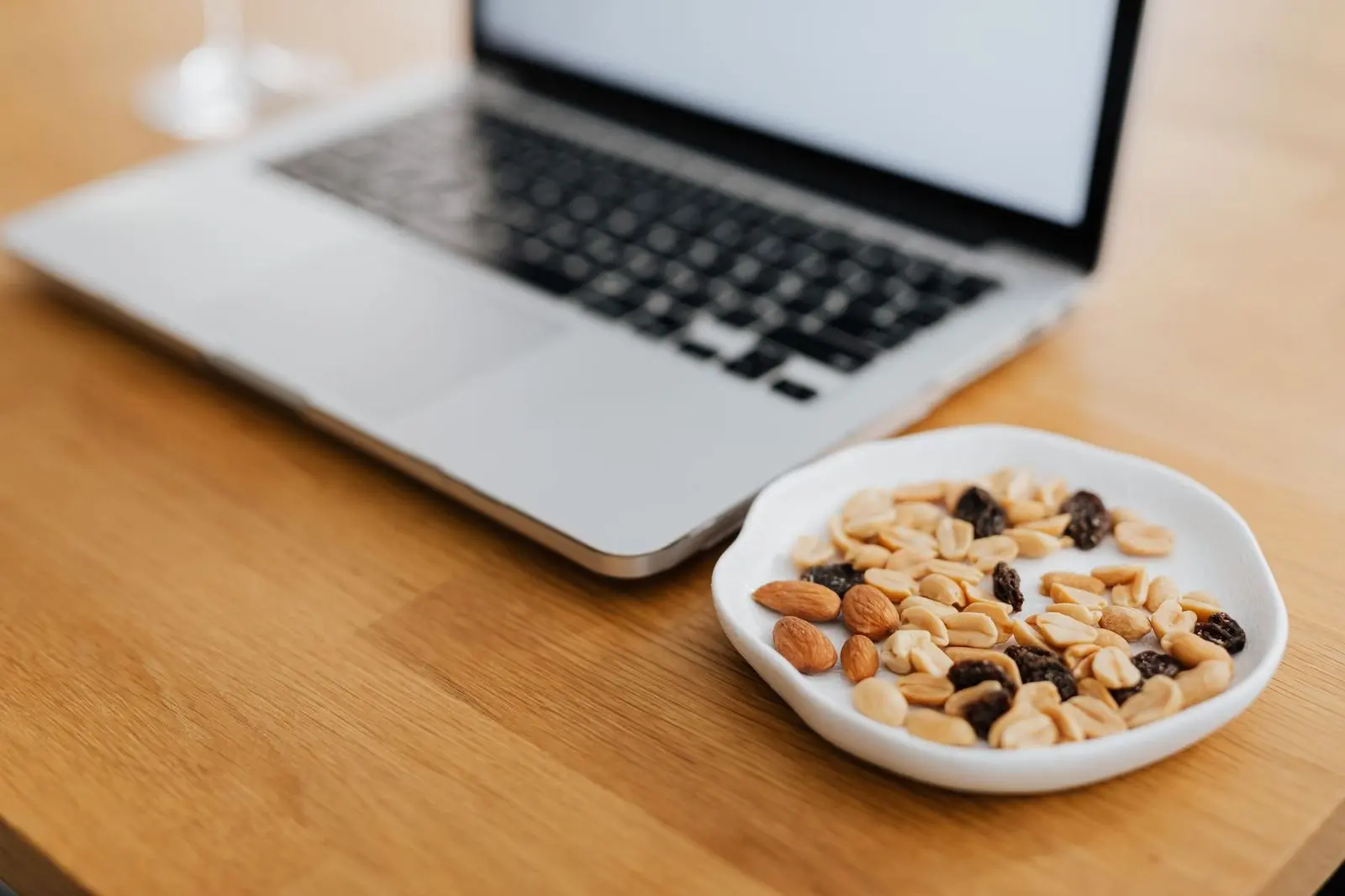
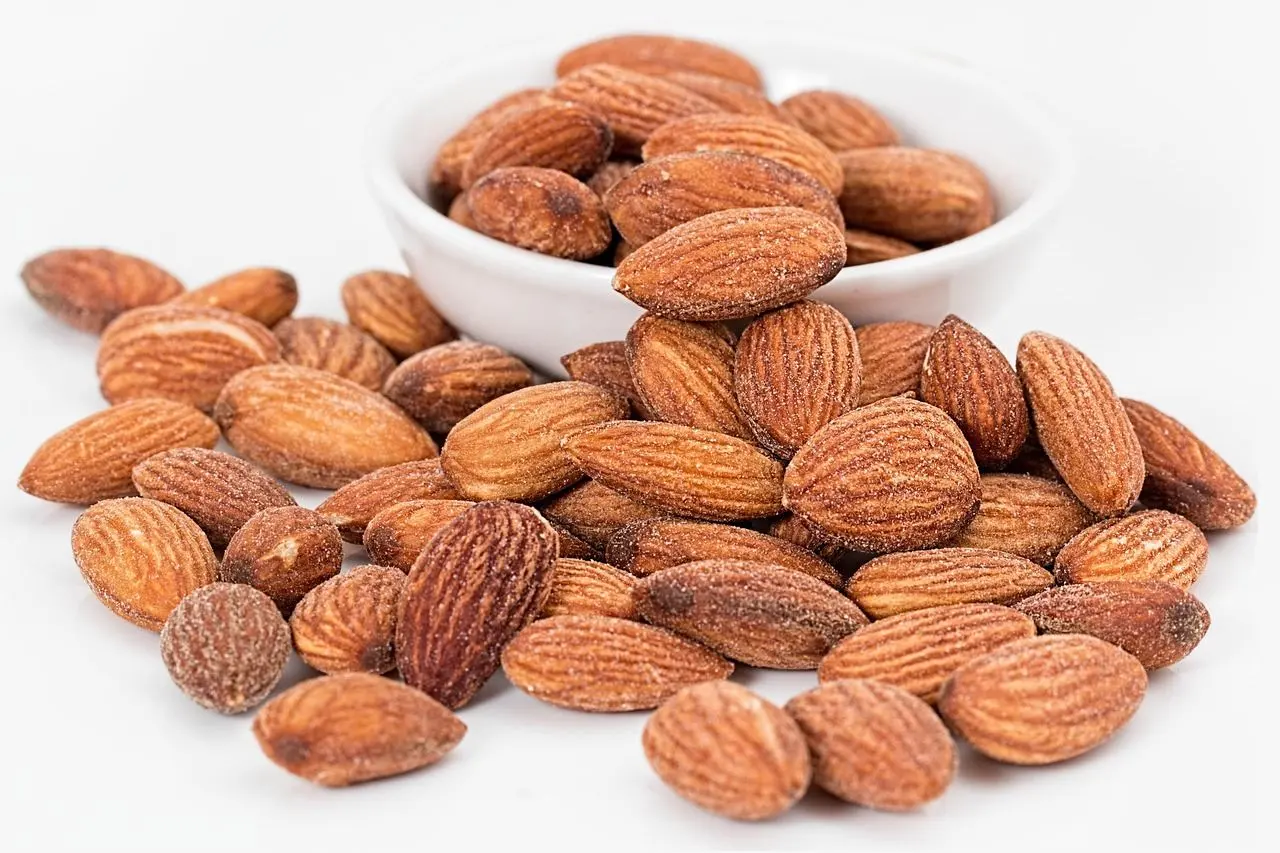
Nuts show the problem best. A serving of about 23 almonds is small, and MedlinePlus notes that snacking straight from the bag makes it very easy to eat too many calories.
Other portions listed by the same source:
- Pretzels: 28 grams
- Cherry or grape tomatoes: 75 grams
- Hummus: 120 grams
- Whole-grain dry cereal: 70 grams, provided sugar is not among the first two ingredients
Source for these figures: MedlinePlus. Small reusable containers or bags make the measuring a one-off job, not a daily decision.
Setting up your desk routine
A few small habits do more than willpower. Follow these steps once and the setup mostly runs itself:
- Pack your snacks before you leave home, or the night before, as the Center for Young Women’s Health advises.
- Put each snack in a small container or bag so it is easy to carry and the portion is already set.
- Swap the candy dish for a fruit bowl.
- Move healthier foods to the front and at eye level, so they are the first thing you see.
- Keep water or another calorie-free drink nearby, since MUSC Health lists hydration among its general tips.
The first, second, third and fourth steps all come from MedlinePlus and the guide above. They are practical suggestions, not medical advice. If you struggle to find snacks you enjoy, MedlinePlus suggests talking to a registered dietitian.
Frequently asked questions
Are nuts a good snack to keep at work?
Show answer
They can be, with one caveat: count them out before you start. A bag left open on your desk invites mindless eating, which MUSC Health’s snacking guide flags as something to avoid in favour of attention to hunger and fullness.
How do I pick a packaged snack?
Show answer
Look at the Nutrition Facts label and choose options with no or little added sugar that are also low in sodium and saturated fat, as the MyHealthfinder tips recommend. For protein bars, MUSC Health says to look for low added sugars and high protein.
Should popcorn go straight from the bag?
Show answer
Tip it into a bowl instead. The MyHealthfinder tips advise serving popcorn or pretzels in a bowl, not directly from the bag or box.
Is a treat at work ever fine?
Show answer
Yes. MedlinePlus says an occasional unhealthy snack is fine and that balance and moderation are the key.