Standing in the snack aisle and unsure which healthy snacks are really worth buying? Look past front-of-pack claims: check the ingredients, fibre, salt and sugar, and keep portions small.
| Item | Value |
|---|---|
| Saturated fat guide for packaged snacks | Less than 3g per 100g |
| Fibre guide for packaged snacks | At least 3g per serve |
| Sodium guide for packaged snacks | Less than 200mg per 100g |
| Suggested serve size | Less than 600kJ |
| Minimum fibre for a “source of fibre” claim | 3g per 100g |
| Protein share for a “high protein” claim | 20% of calories |
The first four rows come from Nutrition Australia’s snack ideas fact sheet and the last two from Which?’s October 2021 report on “healthy” snacks. Figures can change, so check the sources before you rely on them.
What makes a snack wholesome?
Nutrition Australia says a small snack between meals can stop you getting too hungry, and that hunger can lead to overeating at the next meal (source). Its advice is to pick snacks that help meet your nutrient needs without being heavy on kilojoules, fat, salt and sugar.
In practice, the fact sheet points to nutrient-dense foods as the default: fruit, vegetables, wholegrains, reduced fat dairy, and nuts or seeds. A packaged snack is not banned, but it has to earn its place on the label.
Whole-food snack ideas that need no label
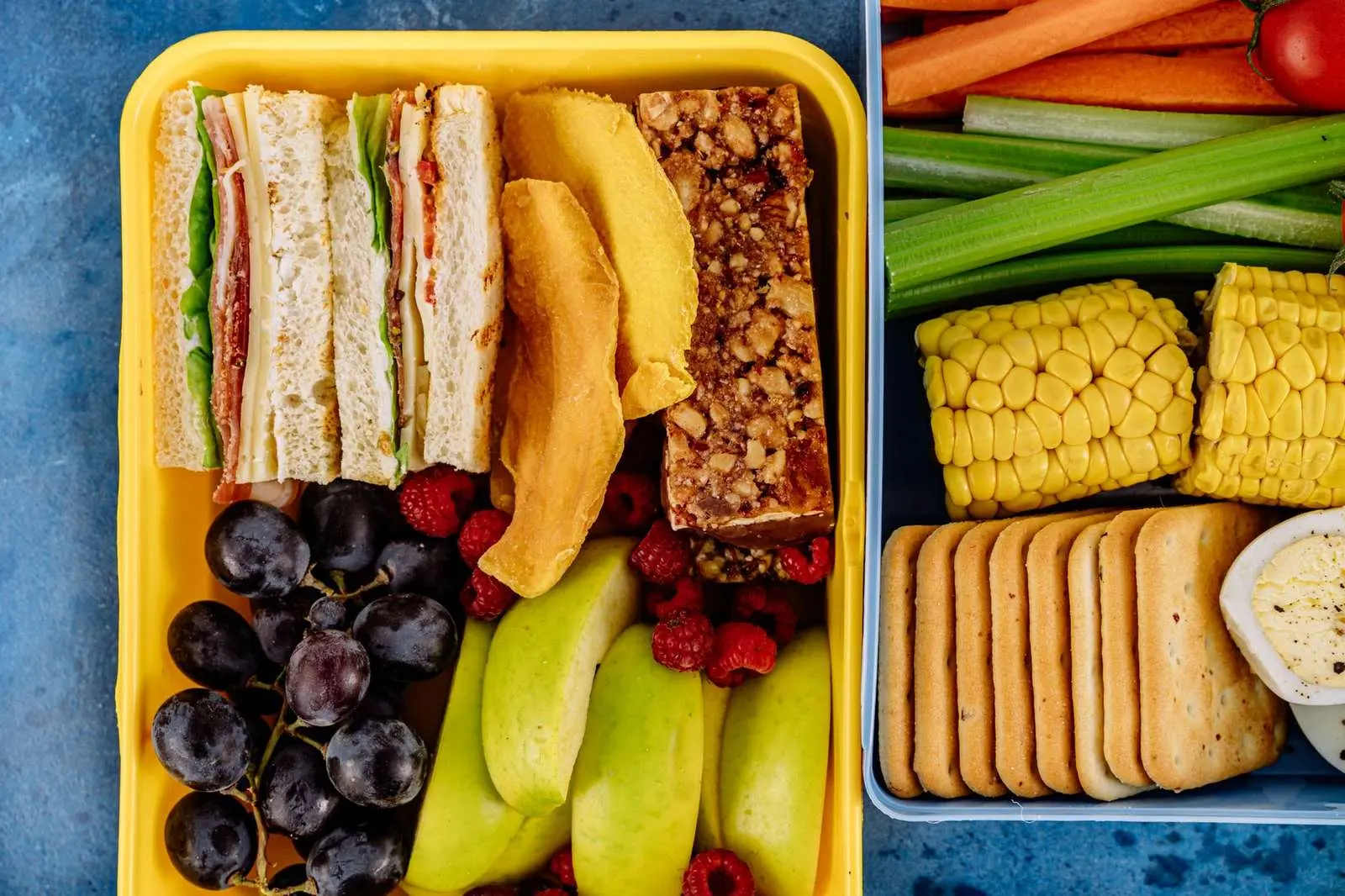
The simplest healthy snacks are single foods or two-item pairings. These ideas all come from Nutrition Australia’s fact sheet:
- Avocado, described there as a rich source of healthy fats.
- Multigrain bread, which the fact sheet says is higher in fibre with a lower GI than other breads.
- Lower-fat dips such as cottage cheese, hummus, tomato salsa and tzatziki, while creamy dips like French onion or cheese and chives are best limited.
- A serve of fruit at morning or afternoon tea, which helps you reach the recommended 2 serves of fruit a day (source).
- Tinned tuna or salmon, on its own or with wholegrain crackers, chosen in spring water with no added salt.
- A slice of fruit toast, alone or with ricotta or cream cheese, as a sweet option that still contains fibre.
- Greek yoghurt, a filling choice and a good source of protein and calcium, in a variety with no added sugar.
None of these needs a long ingredient list, which makes them easy to rotate through a week. If you want more fibre without much planning, the page on high fibre snacks goes deeper.
How to read a packaged snack’s label
Sometimes only a packet will do, and Nutrition Australia suggests checking the nutrition panel and ingredients list first. Its yardstick is less than 3g of saturated fat per 100g, at least 3g of fibre per serve and less than 200mg of sodium per 100g, with mainly whole food ingredients and few additives.
The same sheet adds that most packaged products come in larger serving sizes than we need, and suggests keeping a serve to less than 600kJ. Those are guides for choosing between products, not pass-or-fail rules.
A quick routine for the shelf:
- Read the ingredients list first and look for mainly whole foods with few additives.
- Check the serving size, because a panel can describe a smaller portion than you actually eat.
- Compare saturated fat, sodium and fibre between products on the same basis.
- Scan for sugar under other names and for vague flavouring terms.
A separate guide shows how to read snack food labels panel by panel. Sugar often hides in the ingredients, and the list of names for added sugar on food labels helps you spot it. Ingredient lists also carry flavourings, and the page on what does natural flavouring mean explains the term.
When “healthy” claims mislead
In its October 2021 report, Which? noted that some claims must be backed up: a “source of fibre” food needs at least 3g of fibre per 100g, and a “high protein” food needs 20% of its calories from protein. Those rules say nothing about sugar, fat or salt, so a health halo can hide them.
The same report found that some snacks marketed as healthier were no higher in protein or fibre than standard ones. Its headline finding was that such snacks can be just as bad as unhealthy alternatives on key nutrition measures (Which?).
Fruit-based snacks
Which? described fruit-based snacks for children as closer to confectionery than fruit. Even without added sugar, they are processed enough that Public Health England classes the sugar inside as free sugar, which is damaging to teeth (Which?).
One 20g pack of a raspberry and blueberry fruit snack held 7.6g of free sugars, almost two teaspoons, according to the same report. A small portion is easy to eat in one go, unlike the whole fruit it stands for.
Vegetable, lentil and baked crisps
Vegetable and lentil crisps sound lighter than potato crisps, but Which? found this is not necessarily so. Lentil crisps can carry more salt: one had 2.4g of salt per 100g, against 1.3g for a potato crisp.
Popped and baked crisps tend to be lower in saturated fat than traditional crisps, the report says. It also notes that baked corn, pea and bean snacks contain good sources of fibre and protein, though added flavourings can be high in salt (Which?).
Cereal bars, flapjacks and rice cakes
Which? said cereal bars often have a healthy image they do not deserve, and flapjacks are similar. “No added sugar” does not always mean no sugar: honey, molasses, agave nectar, brown rice syrup and concentrated apple juice can stand in for it (Which?).
Chocolate-covered rice cakes were found to have more sugar, fat and saturated fat than a chocolate digestive biscuit. Savoury rice cakes are lower in those, but tend to be high in salt, per the Which? report.
Smoothies and juices
Blending and juicing reduce fibre and release sugars, creating free sugars that are easy to over-consume. That is why a 150ml serving of juice or smoothie counts as only one of your five-a-day, even if you drink more (Which?).
Where popcorn fits among everyday snacks
The sources used here do not rate popcorn directly, so this page makes no claims about it. What it offers is a way to test any snack, popcorn included, against the same label checks.
The wider popcorn section covers the snack on its own terms, and three questions about it come up often.
- Per-serving figures sit in the popcorn nutrition facts guide.
- The grain question has its own page: is popcorn a whole grain.
- Anyone avoiding gluten can read is popcorn gluten free.
Putting a snack routine together
Start from whole foods, then use packaged items as backup rather than the base. That order keeps the label work for the moments that actually need it.
For desk days, healthy snack ideas for work collects options that travel well. If you prefer to make your own, a set of easy snack recipes keeps the ingredient list in your hands.
Frequently asked questions
Are healthy snacks always low in sugar?
Show answer
No. Which? research published in October 2021 found that some snacks sold as healthier match standard snacks on key nutrition measures, so judge the panel rather than the pack front (Which?).
How much fibre should a packaged snack have?
Show answer
Nutrition Australia suggests at least 3g per serve (fact sheet). A “source of fibre” claim, by contrast, is tied to 3g per 100g, as Which? explained, so check which basis a label uses.
Is a less healthy snack ever fine?
Show answer
Yes, occasionally. Nutrition Australia says an odd treat is acceptable as long as most of your snacks are nutrient-dense foods (fact sheet).
Does a smoothie count as a piece of fruit?
Show answer
Only partly. Blending lowers fibre and frees sugars, so Which? says a 150ml portion adds just one to your five-a-day (report).